

Strategy & Future-Readiness
· Topic 1 · Article 1 of 3
The strategic case

Why Your Law Firm Strategy Offsite Is Not Preparing You for a Volatile Legal Future

The Treehouse team
The Treehouse team
23 March 2026
Why Your Law Firm Strategy Offsite Is Not Preparing You for a Volatile Legal Future

Every year, partners gather in boardrooms to finalize the firm’s strategic plan. By the time they return to their desks, the world has already moved on.

The annual strategy offsite has become a ritual of modern legal practice. It is a predictable choreography: a review of the previous year’s financial performance, a cursory glance at competitor rankings, and a collaborative attempt to set priorities for the next twelve months. There is immense effort expended, yet the results remain eerily consistent. The initiatives proposed feel ambitious on a Friday afternoon, but by the following quarter, they are quietly subsumed by the relentless gravity of billable hour pressure and client demands.

This cycle is not a failure of intelligence or intent. It is a failure of architecture. By anchoring our strategic conversations in the immediate past and present, we inadvertently lock ourselves into a trajectory that ignores the structural shifts currently reshaping the legal landscape. We are optimizing for a business model that is rapidly becoming a legacy, while the actual market evolves in ways that our current planning frameworks simply cannot capture.

The Strategic Imperative for a New Era

Why does this matter now? The legal industry is currently navigating a convergence of technological disruption, changing client expectations, and shifting talent paradigms that make incremental planning dangerous. When a firm focuses solely on the current fiscal year, it treats strategy as a budgeting exercise rather than a survival mechanism. This leads to a persistent 'innovation theater' where firms announce new initiatives that never actually change the underlying economics of the practice.

The competitive risk of inaction is profound. While established firms optimize for the status quo, new entrants—unencumbered by legacy structures—are successfully capturing high-value work by leveraging automation and alternative delivery models. If your strategy process does not account for these external realities, you are effectively choosing to be disrupted by design. Leadership today requires the courage to move beyond the comfort of familiar metrics.

The Fallacy of Forward-Looking Strategy

The core strategic insight is that most firms plan 'present-forward,' which is essentially a process of extrapolating current trends into the future. This is flawed because it assumes the future will look like a linear extension of today. Instead, firms must adopt a 'future-back' approach. This means identifying plausible, high-impact future states for the legal market and working backward to determine what the firm must do today to be successful in those environments.

Strategic failure occurs when we confuse activity with progress. A list of goals for the next year is not a strategy; it is a to-do list. Genuine strategy requires making hard choices about what to stop doing. If your offsite does not result in the divestment of legacy practices or the fundamental re-engineering of how services are delivered, it is not a strategy session—it is a performance review of the past.

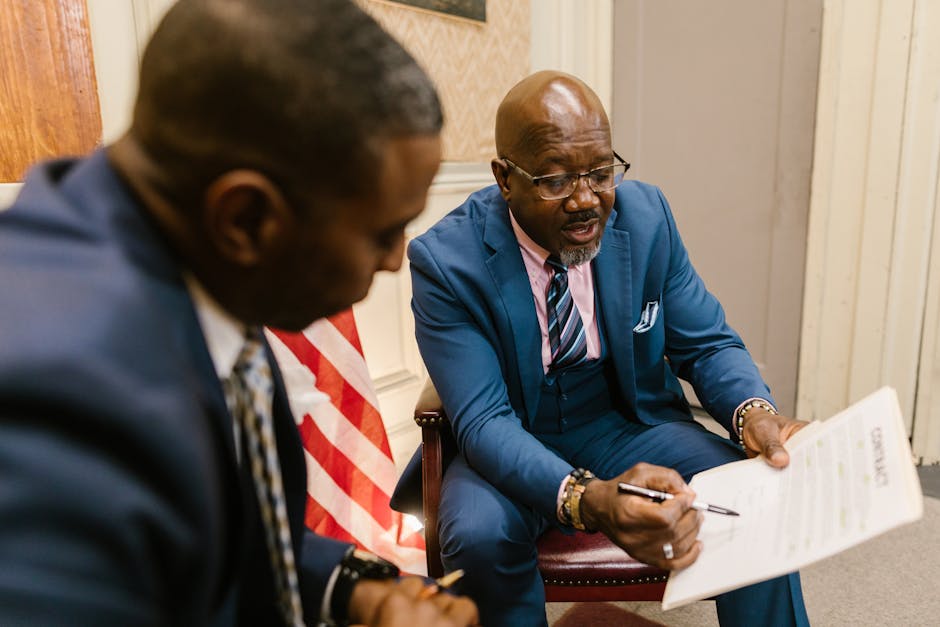
Why Your Law Firm Strategy Offsite Is Not Preparing You for a Volatile Legal Future

When the Routine Becomes a Liability

Consider the typical approach to 'innovation' in large firms. A firm might spend an entire offsite debating which new software to procure to improve document review efficiency. They leave with a plan to implement a tool. While this is a positive tactical step, it is not a strategic change. Meanwhile, a competitor might use a tool like Law 2035: Workshop in a Box to facilitate a deep, self-led session where their leadership team maps out the impact of generative AI on their specific client base over the next five years. While the first firm is optimizing a task, the second firm is re-imagining its relationship with the client. The first firm is working harder; the second firm is becoming more relevant.

The Shift to Future-Back Planning

To transition from the current cycle of failure to a future-ready stance, firms must adopt a different mental model. Strategy must be treated as an exercise in scenario planning rather than consensus-seeking. The objective should not be to agree on a single, safe path, but to stress-test the firm against multiple, high-velocity futures.

This is where structured, independent engagement becomes vital. Tools like the Law 2035 Workshop provide a framework for leadership teams to step away from the daily churn and engage in a guided, future-back process. By using this futures workshop kit, partners are forced to grapple with the 'unthinkable'—such as the total commoditization of core practice areas—and create actionable responses that do not rely on the crutch of current fiscal targets. It turns the strategy offsite from a meeting into a laboratory.

Why Your Law Firm Strategy Offsite Is Not Preparing You for a Volatile Legal Future

Taking Control of Your Firm's Trajectory

The next time you schedule a strategy session, change the rules of engagement. Stop reviewing the past until you have defined the future. If you want to move beyond the standard, unproductive retreat, provide your leadership team with the tools to facilitate their own rigorous, future-focused inquiry. Using a resource like Law 2035: Workshop in a Box allows you to bypass the need for external facilitators and instead put the power of strategic foresight directly into the hands of your partners. The goal is to build a culture where strategic planning is an ongoing, analytical practice rather than an annual, performative event. Start by asking: If we were to build this firm from scratch today, would we look like we do now? If the answer is no, your strategy must change.

Ready to run a futures thinking session with your legal team?

The Law 2035: Workshop in a Box gives you everything you need to run an energising, structured workshop — no specialist facilitation experience required.

Get your copy
Close menu  

Treehouse Innovation

Upskilling

Equip your people with critical future skills to thrive in the age of constant change.

Go to Upskilling

Innovation Training

Equip teams to creatively solve problems

Change leadership

Empower leaders to make change happen

Artificial Intelligence

Integrate AI tools for faster, better outcomes

i2: Skills

Assess and develop the skills to thrive through change