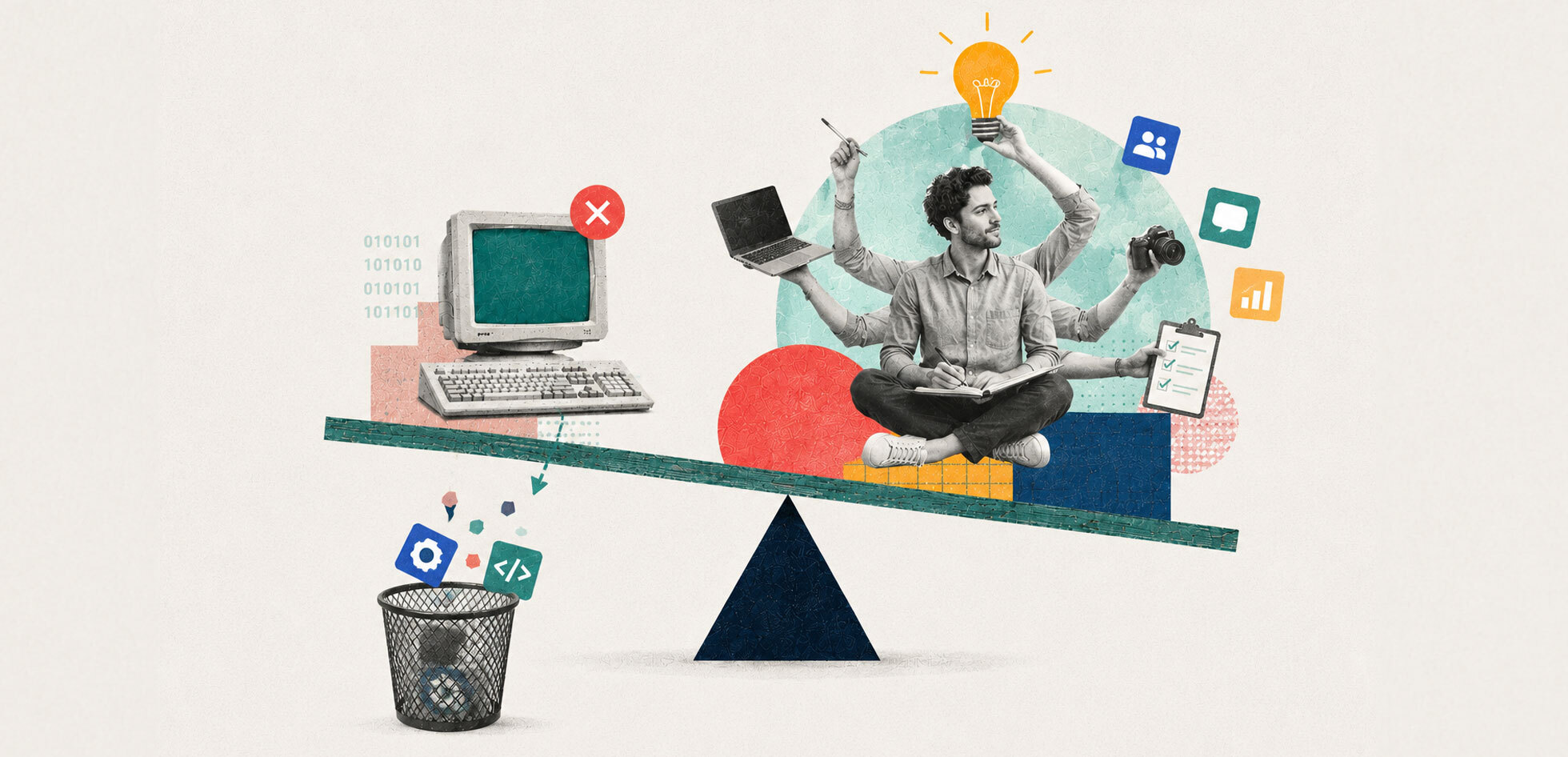
Hard skills have a shelf life. Human skills don’t.

75%
of global knowledge workers use AI at work.
Microsoft Work Trend Index 2024
95%
of organisations are getting zero measurable return from GenAI investment.
MIT NANDA, The GenAI Divide: State of AI in Business 2025
39%
of workers’ core skills are expected to change by 2030.
World Economic Forum, Future of Jobs Report 2025
The upskilling cycle is broken
There’s a pattern I keep seeing in organisations right now.
They invest heavily in upskilling their teams on the latest tools: The new platform, the AI workflow, the updated software stack. Fast forward to six months later and the tools have changed again. So, the training feels wasted, the team feels behind and the cycle repeats.
The problem isn’t the training. It’s what’s being trained.
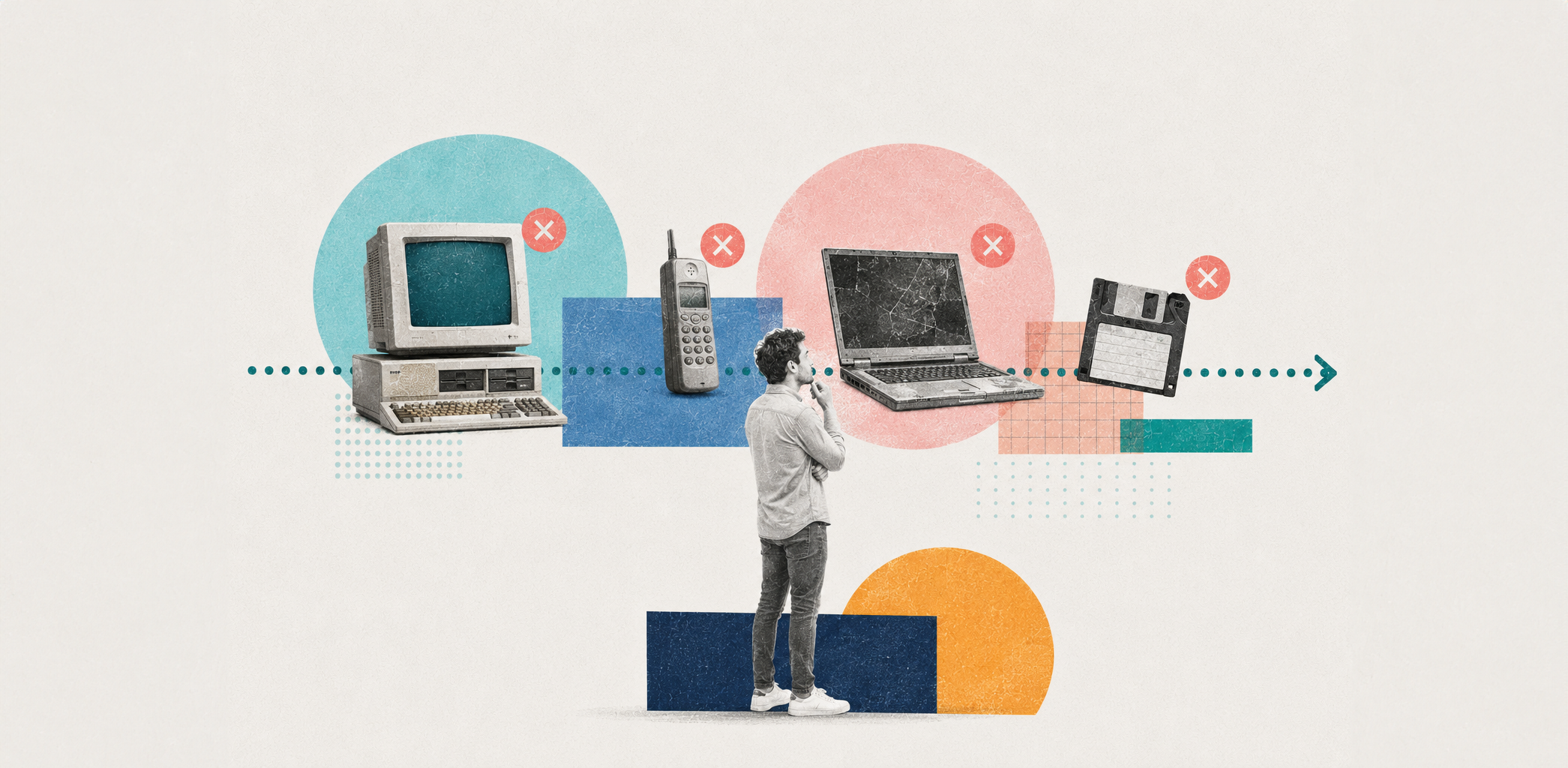
Hard skills have a shelf life
In a period of rapid technological advance, technical knowledge decays quickly. The specific tools, platforms, and processes that defined a role three years ago can easily be either redundant or unrecognisable. We’ve spoken to senior leaders across industries who describe the same experience: almost everything they learned early in their career has either evolved beyond recognition or disappeared entirely.
This isn’t a crisis, it’s a pattern. And it’s accelerating.
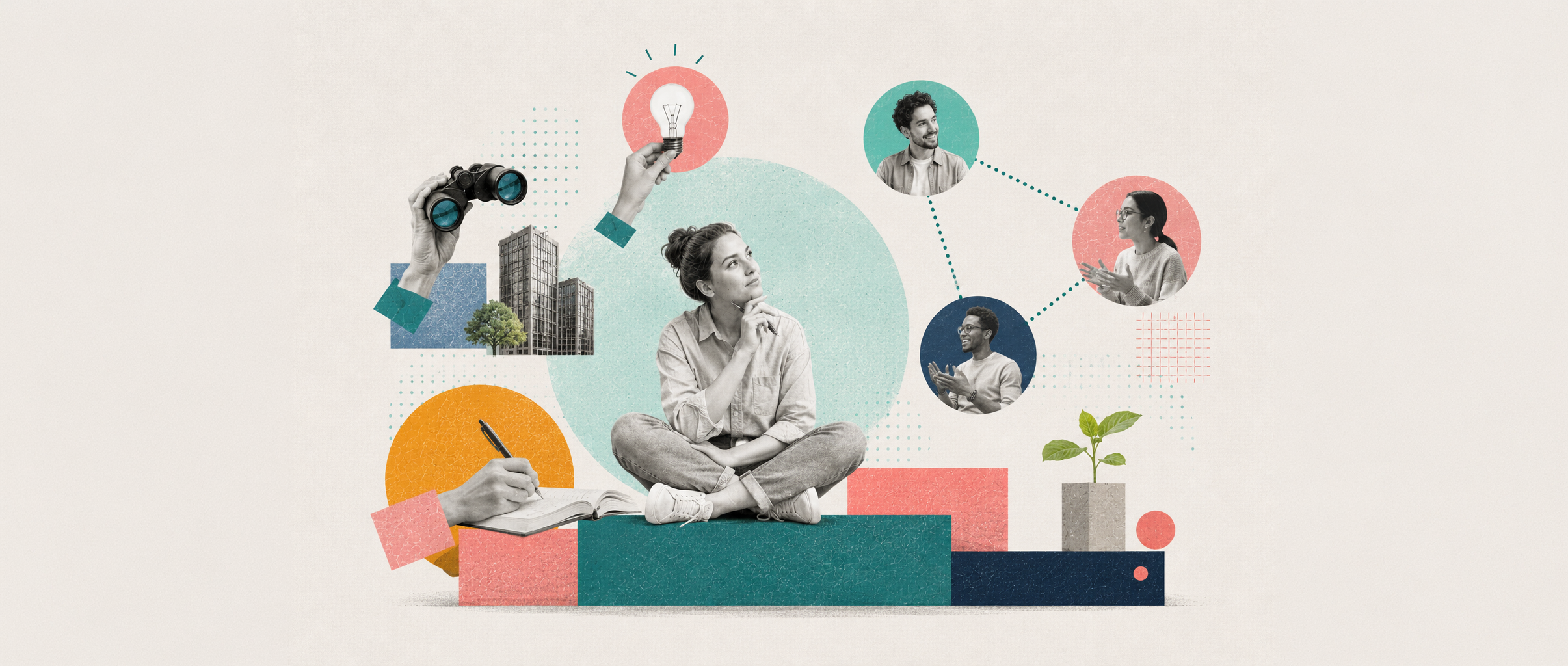
Human skills compound
Some skills are no longer “nice to haves”. Once filed under the ‘soft skills’ section of a CV, they are now core to the job: the ability to think clearly under pressure. To listen before jumping to solutions. To connect dots across teams and disciplines. To stay curious when everything feels uncertain.
These are, increasingly, the hard currency of the labour market.
Our research with leaders across the media industry, one of the fastest-changing sectors in the economy right now, found that the skills employers value most by 2030 aren’t technical checklists. They’re the human and cognitive capacities that no software update can make obsolete.
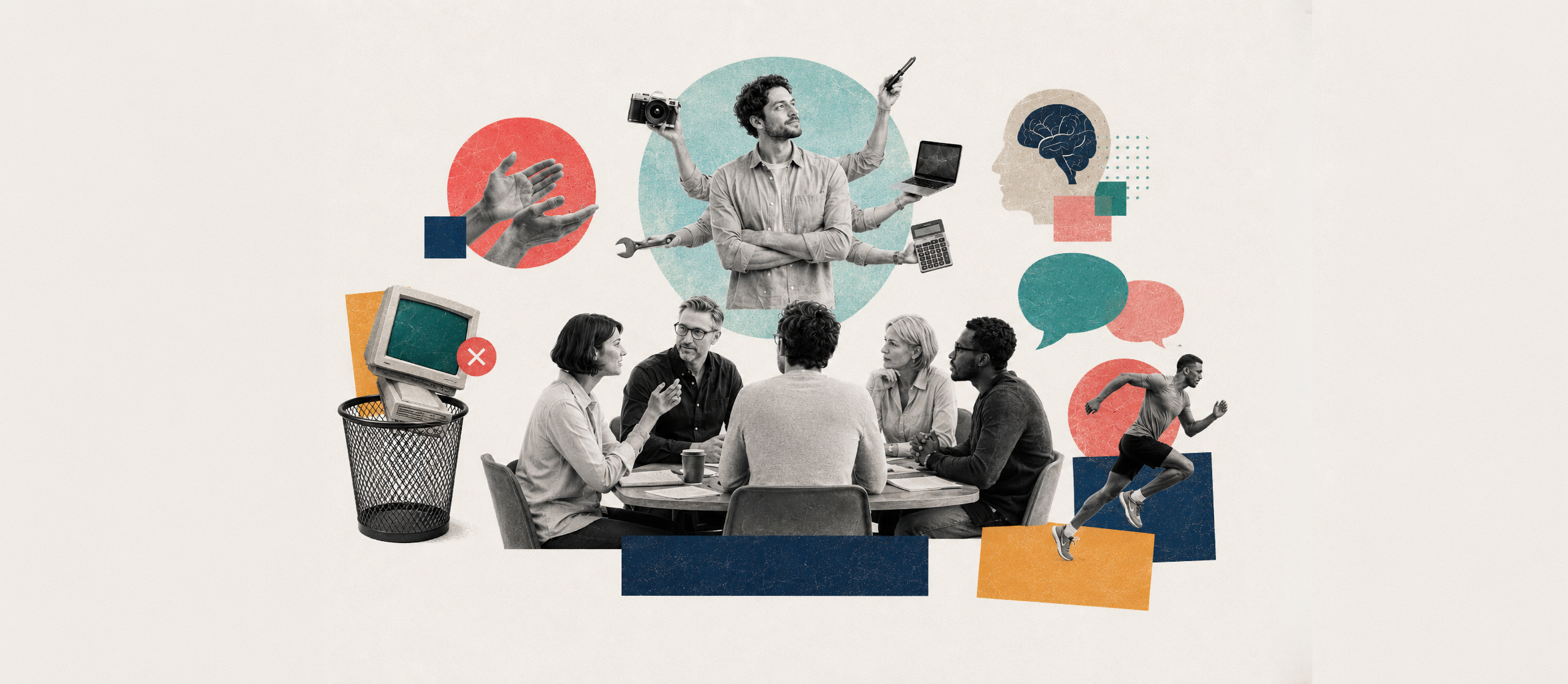
When we spoke to leaders, five things kept coming up:
- People skills are the real power skills. Not soft skills… power skills. The ability to stay calm under pressure, think clearly, lead through ambiguity, and generate new ideas. These are what employers say will matter most by 2030. And they’re the hardest things to automate.
“The future employee will need to be ‘jack of all trades, master of none’, because AI will have that mastery piece.”
SVP of Product & Technology, global broadcaster
- The “jack of all trades” is back and this time, it’s a compliment. For decades, specialists ruled. Deep expertise in one area was how we climbed the career ladder. That’s now shifting. The leaders we spoke to described a growing need for people who can move fluidly across technology, strategy, and creative execution. Not because depth doesn’t matter, but because AI is increasingly handling the mastery piece.
“If you’re not comfortable with change, you’re in the wrong place.”
VP of Distribution Engineering, major media company
- Tech fluency is about attitude, not kit. The sound engineer who plays with new tools out of curiosity. The producer who finds a smarter way to get something done. The journalist who questions what the AI output is actually telling them. What separates the people coping best with change isn’t which tools they know, it’s how they approach tools they’ve never seen before with open curiosity and a willingness to experiment.
“If you’re not adding anything to the top of what AI gives you, you’re effectively proving it can take your job.”
Strategy Director, marketing and PR agency
- Human creativity is becoming more valuable, not less. As AI takes on more of the execution work, like the rough cuts, the formatting and the first drafts, the role of human contribution shifts. It moves toward direction, taste, judgement, and the kind of storytelling that creates genuine emotional connection. The people who understand this are leaning in. The ones who don’t are at risk of being outpaced not by AI, but by the colleagues who’ve figured out how to work alongside it.
- The most resilient people step back before they dive in. Speed is celebrated everywhere right now. But the professionals valued the most aren’t the fastest. They’re the most deliberate. They stop to understand what’s actually needed, think it through, and then choose the right way forward. That pause, that judgement, that refusal to just react is increasingly rare, and increasingly valuable.
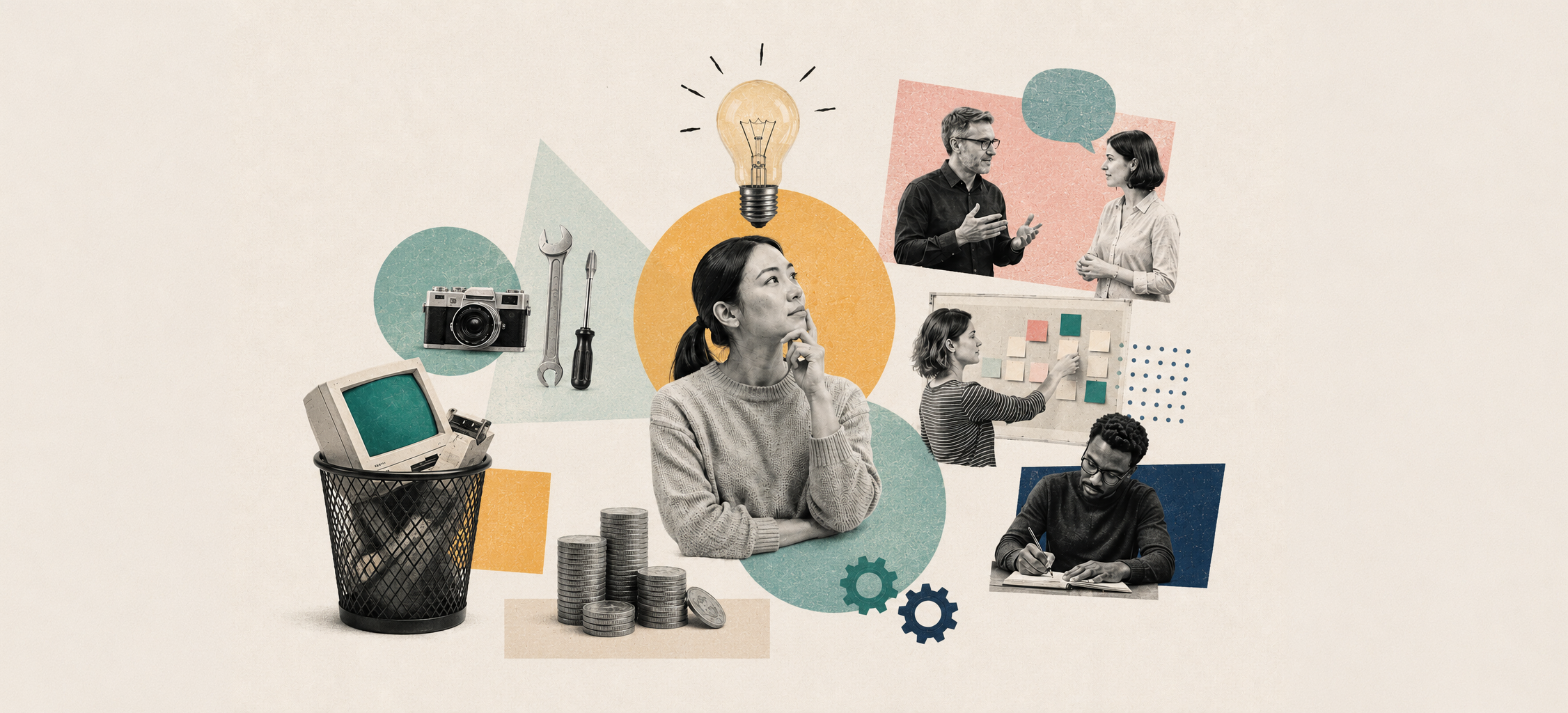
So what does this mean practically?
If your L&D investment is almost entirely focused on tool adoption, you’re solving for the short term. Because in this uncertain future, one thing is certain: those tools will change. The person who has invested only in mastering the current tool stack will quickly become less valuable. But the person who can think, adapt, and connect will still be valuable in five years.
The organisations that are getting this right aren’t choosing between technical and human skills. They’re treating human skills as the foundation, which makes technical investment actually stick.
The question worth asking isn’t “what tools do my team know?”
It’s “what kind of thinkers do I have?”
Ready for what comes next? Get in touch