FCA: Open Finance Policy Sprint 2025
Co-creating the future of UK financial services together.

The data exists. The technology exists. What’s missing are the rules of the road.
That was the insight that surfaced, unprompted, repeatedly, across working groups, during the two days Treehouse Innovation spent at FCA headquarters in March 2025. It became the governing idea for everything that followed. And it is exactly the kind of thing that doesn’t emerge from a consultation document.
The challenge
Open finance has the potential to fundamentally change how people and businesses in the UK manage their money. The ability to share financial data across banks, pension providers, insurers, mortgage lenders and beyond could unlock a new generation of personalised, proactive financial services. The technology to do this largely exists. The appetite, across industry, is real.
But appetite and technology are not enough. Open finance only works if the entire ecosystem of financial institutions, fintechs, technology providers, regulators and consumers moves together. That kind of alignment cannot be mandated into existence. It has to be built.
The Financial Conduct Authority understood this. Ahead of the Data (Use) Act Bill, they didn’t want to run a consultation. They wanted to co-create. They wanted the people who would build open finance, and the people who would live with it, to be in the room together, working on real problems, and to leave with something they actually believed in.
They asked Treehouse Innovation to help make that happen.
Designing the sprint
Our starting point was a question: how might the FCA co-create with industry experts breakthrough, market-ready use cases that ensure the UK’s open finance landscape is fully primed for the Bill’s transformative impact?
It’s a big question. Answering it meaningfully, in two days, with more than 110 people from across financial services, fintech, technology and regulation, required a design that could hold ambition and rigour at the same time.
We structured the sprint in two phases. Day one was about permission to imagine. Day two was about making that imagination viable.
Before the sprint began, we spent time with the FCA identifying the right opportunity areas to focus the work: Financial Wellbeing, Financial Growth, Financial Resilience, and a Blue Sky track exploring digital identity and disruptive futures. These became the organising frames for fifteen working groups, each of which would follow the same human-centred design process across both days, moving from open-ended vision towards structured, presentable output.
Day one: from inspiration to ideas
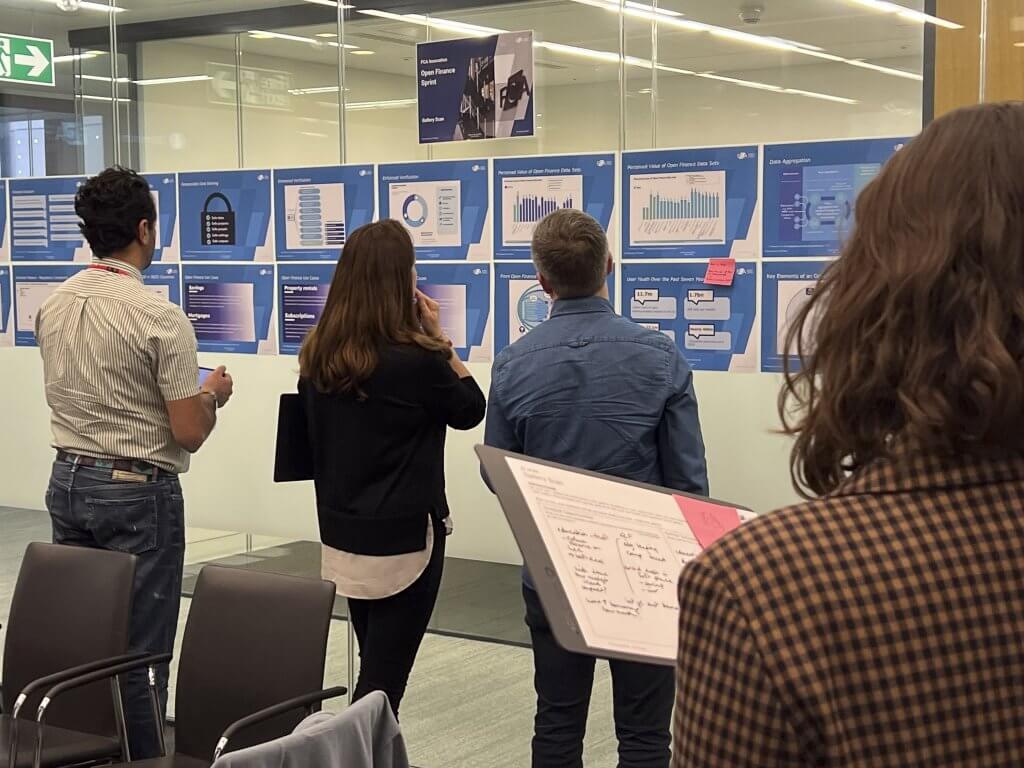
After opening keynotes set the strategic context, we moved quickly into the work. The first exercise was a Gallery Scan, a curated set of materials designed to fuel ambitious, future-oriented thinking. The prompt was simple: be bold. What could open finance look like for people and businesses in 2030? Not what is likely, but what is possible.
From that inspiration, teams moved into a Future Vision exercise, using structured canvases and vision cards to build out what open finance by 2030 could genuinely look like. What emerged was striking, not just in its ambition, but in its consistency. Across fifteen groups, working independently, the same themes surfaced: consumers in full control of their financial data; AI assistants managing money proactively on their behalf; seamless interoperability across sectors; and secure digital identity as the foundation beneath it all.
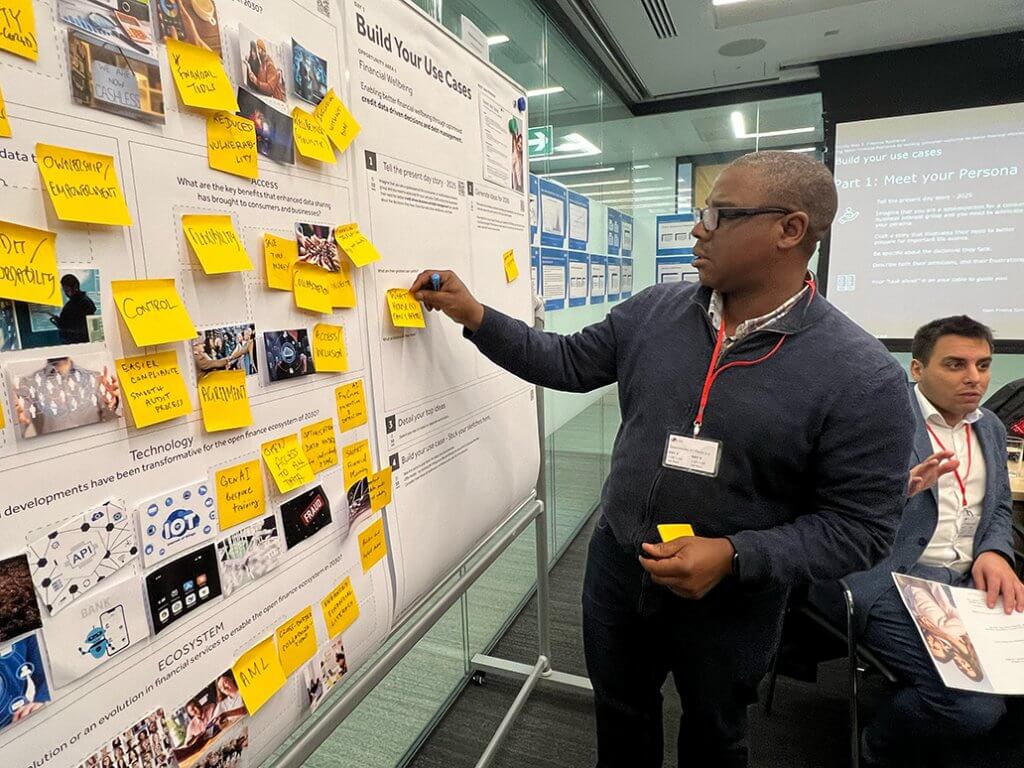
But at Treehouse, we know that vision without empathy is just aspiration. So the afternoon shifted into persona work. Teams were invited to inhabit the people who would actually live with the consequences of open finance, or the lack of it. A first-generation entrepreneur struggling to access SME funding. A family hit by unexpected costs during a major life event. A consumer trapped in a cycle of debt, unable to see a way through. Teams mapped real pains and real ambitions before brainstorming how their 2030 vision might help these people. Ideas went onto post-its, votes identified the most promising, and teams worked in pairs to build 4-frame storyboards, use cases in miniature, grounded in human reality.
By the end of day one, fifteen teams had built use cases. That evening, the boards were reconfigured, the groups reshaped, and each participant assigned to one of three tracks for day two: backcasting the route from today to 2030, building the commercial model, or beginning to construct the presentation. The facilitators prepared overnight. Day two would be different.
Day two: making ideas real
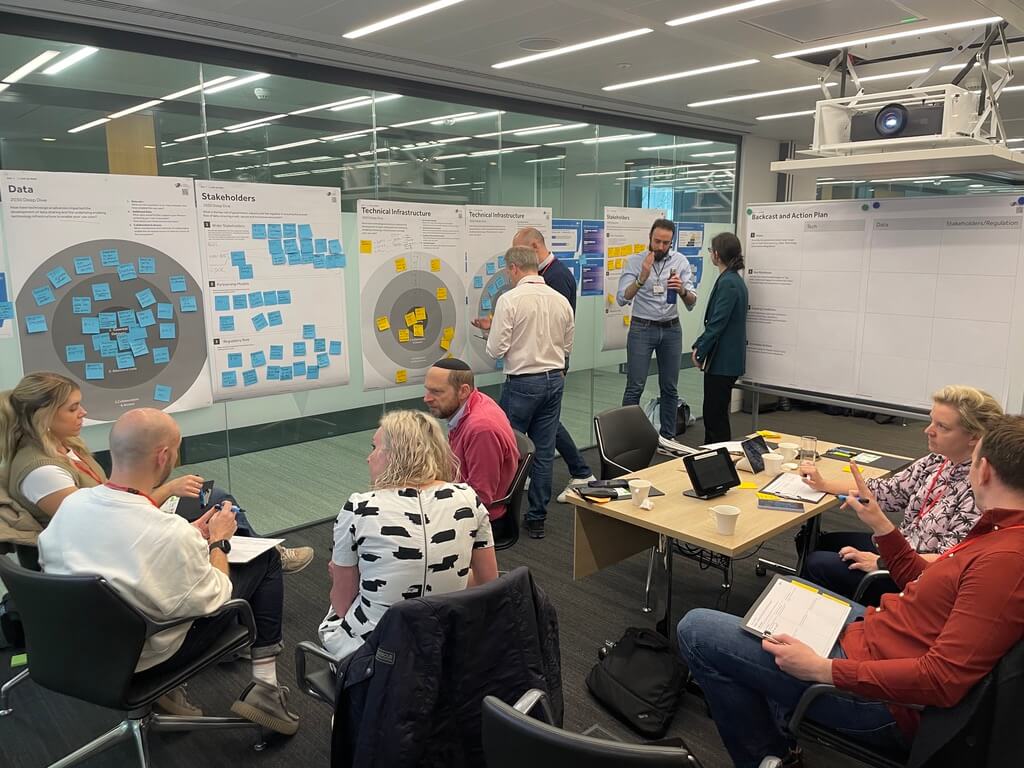
Day two had less of day one’s creative energy and more of its rigour. It opened with teams reviewing and combining their ecosystem models, not just within their own group, but across groups. Specialist sub-teams formed around technical infrastructure, data, and stakeholder and regulatory considerations. Their job was to stress-test the strongest elements from different groups and merge them into a single, cohesive view of what open finance would actually require.
This is the moment where many workshops lose momentum. The creative phase is over; now comes the hard work of making ideas viable. Our facilitation held the thread.
The backcast methodology, working backwards from the 2030 vision to identify the key milestones, enabling conditions, and immediate actions required, gave teams a structured way to translate ambition into strategy. Simultaneously, commercial model teams were mapping stakeholder value, revenue streams, incentive structures and risk frameworks. These were not academic exercises. They were the components that would determine whether any of this could actually happen.
This sprint also gave us the opportunity to bring AI tools directly into the workshop process. Rather than capturing participant insights on post-it notes, we used a voice-capture web form that gathered richer, more nuanced input at speed. Connected via API to a large language model, it synthesised those inputs into use case concepts in real time, giving teams a sharper, faster foundation for building their final presentations.
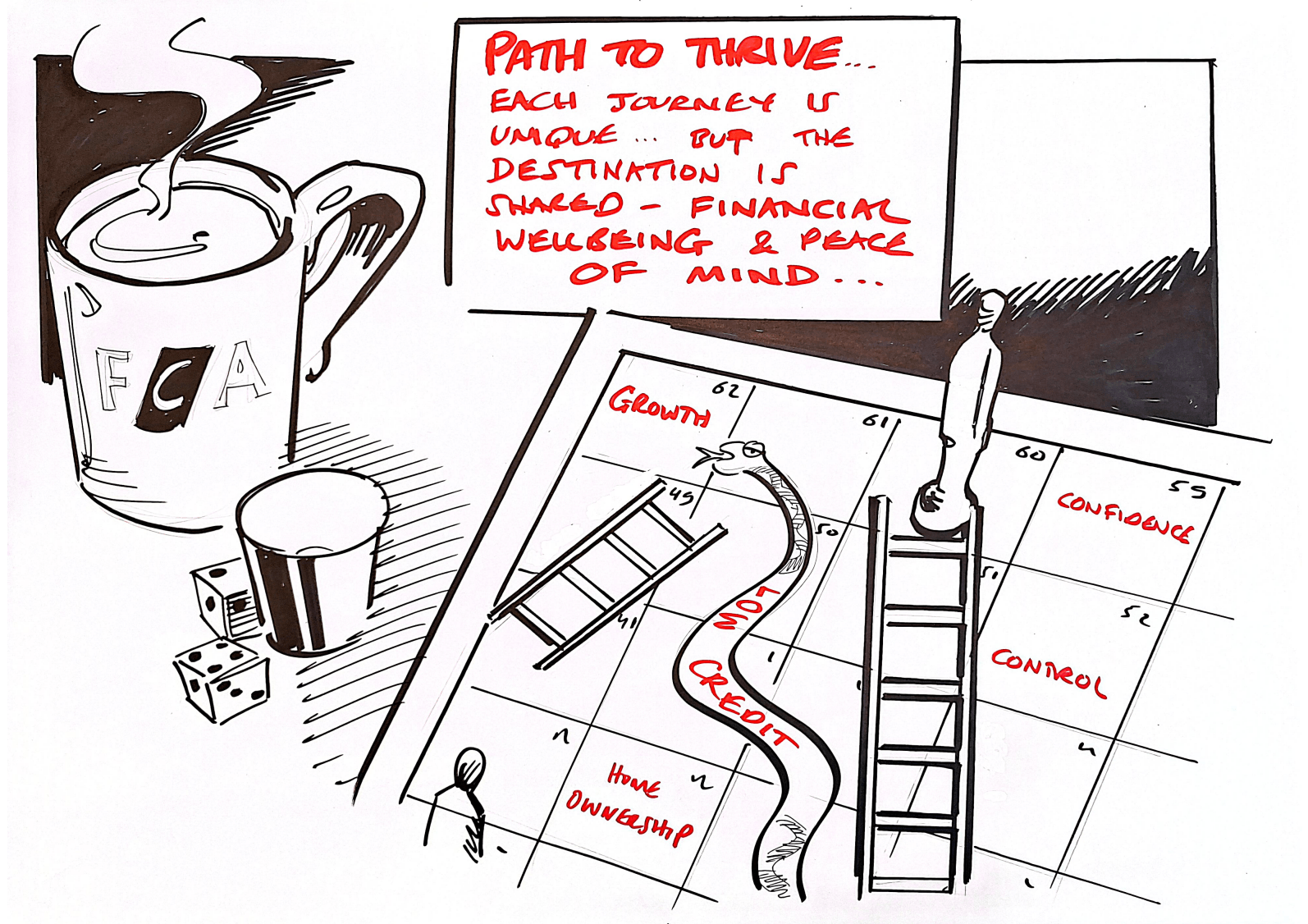
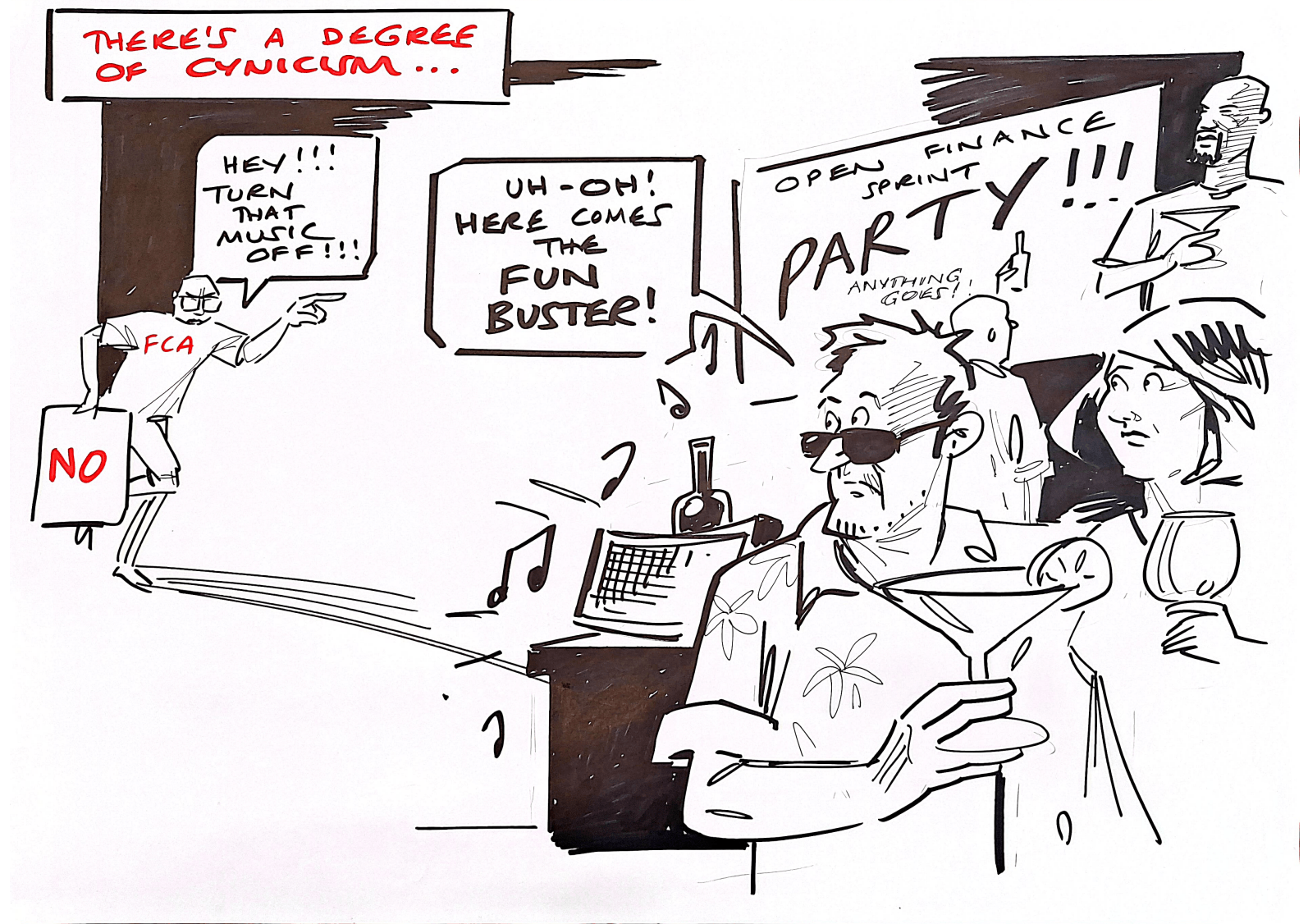
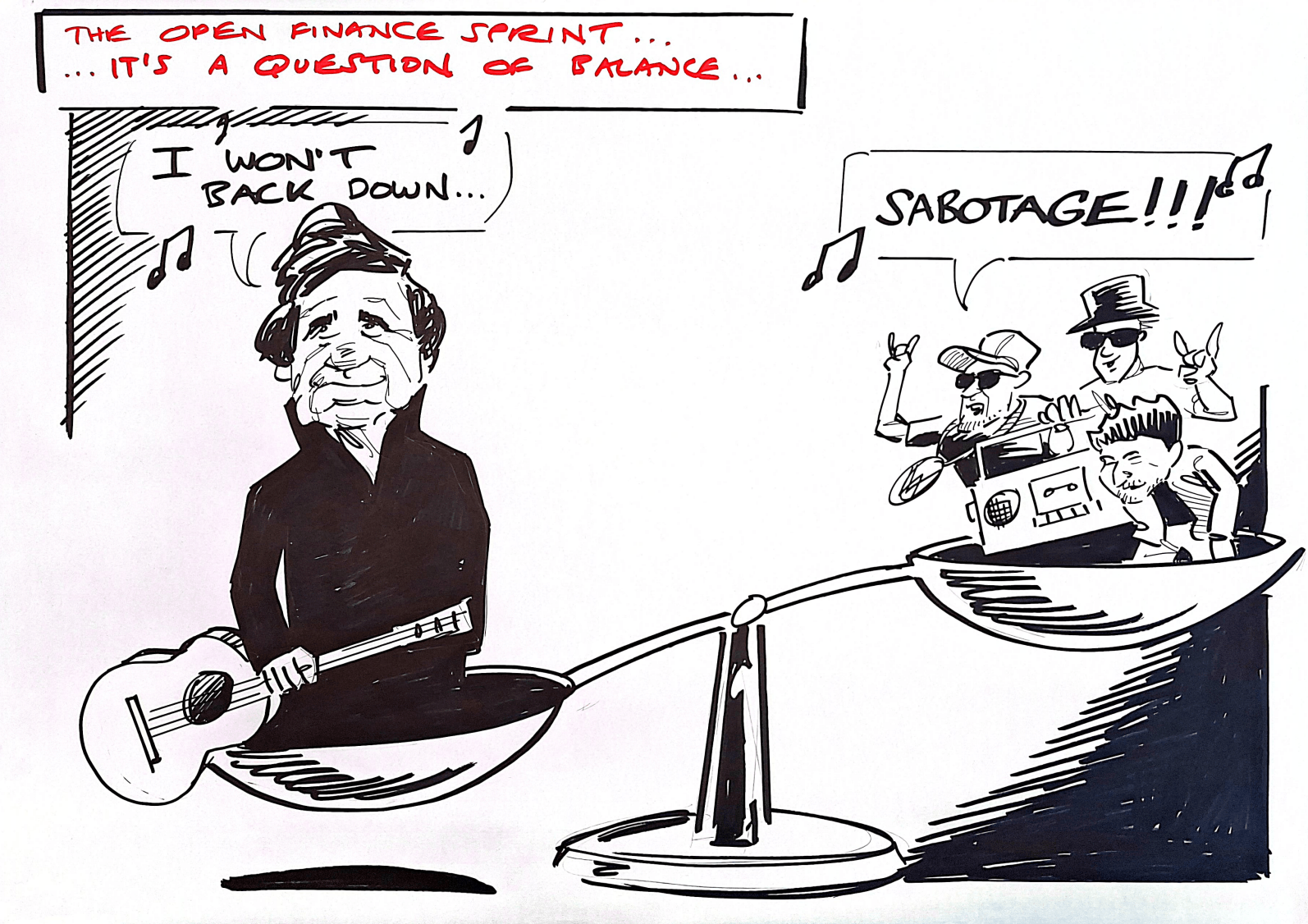
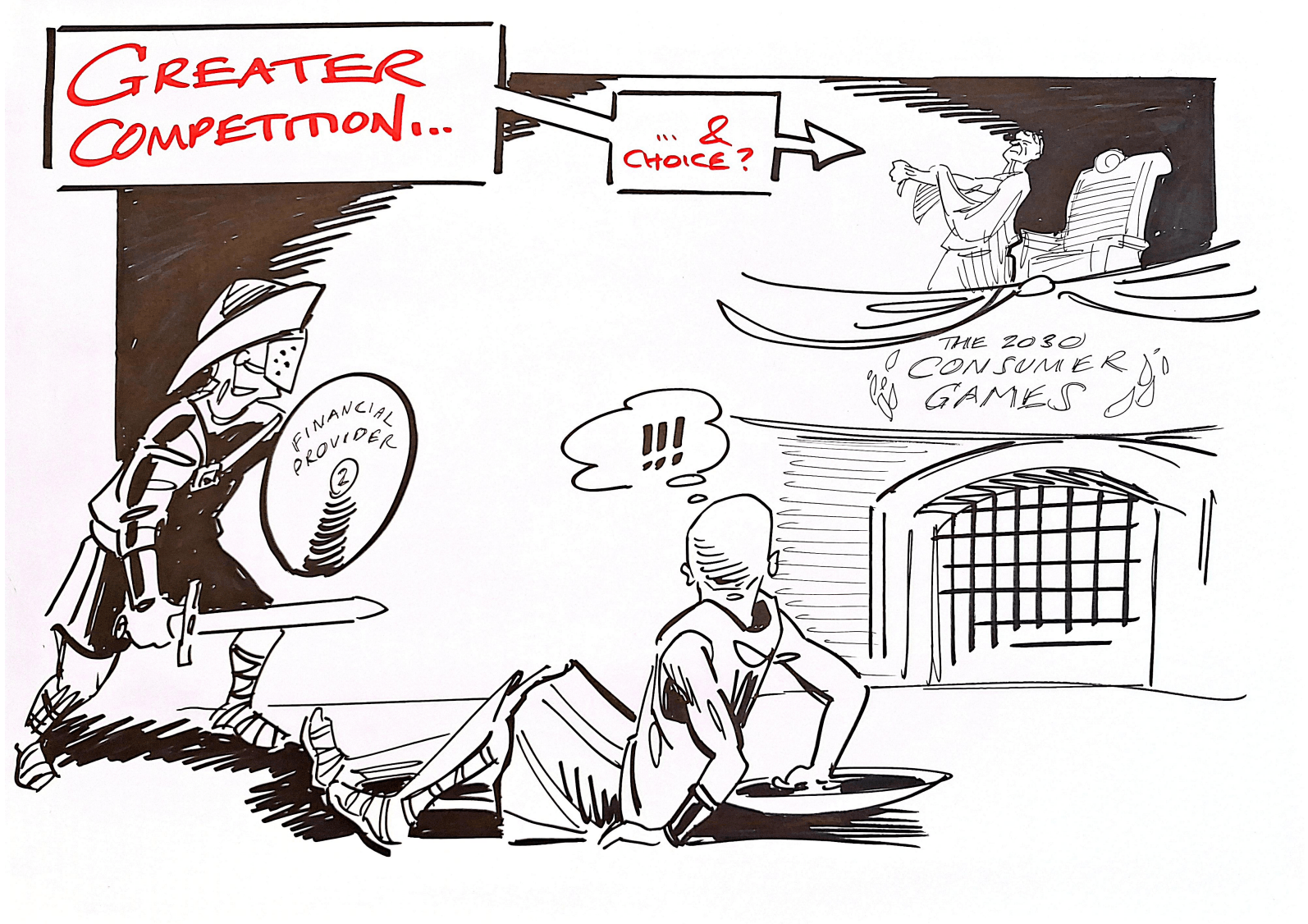
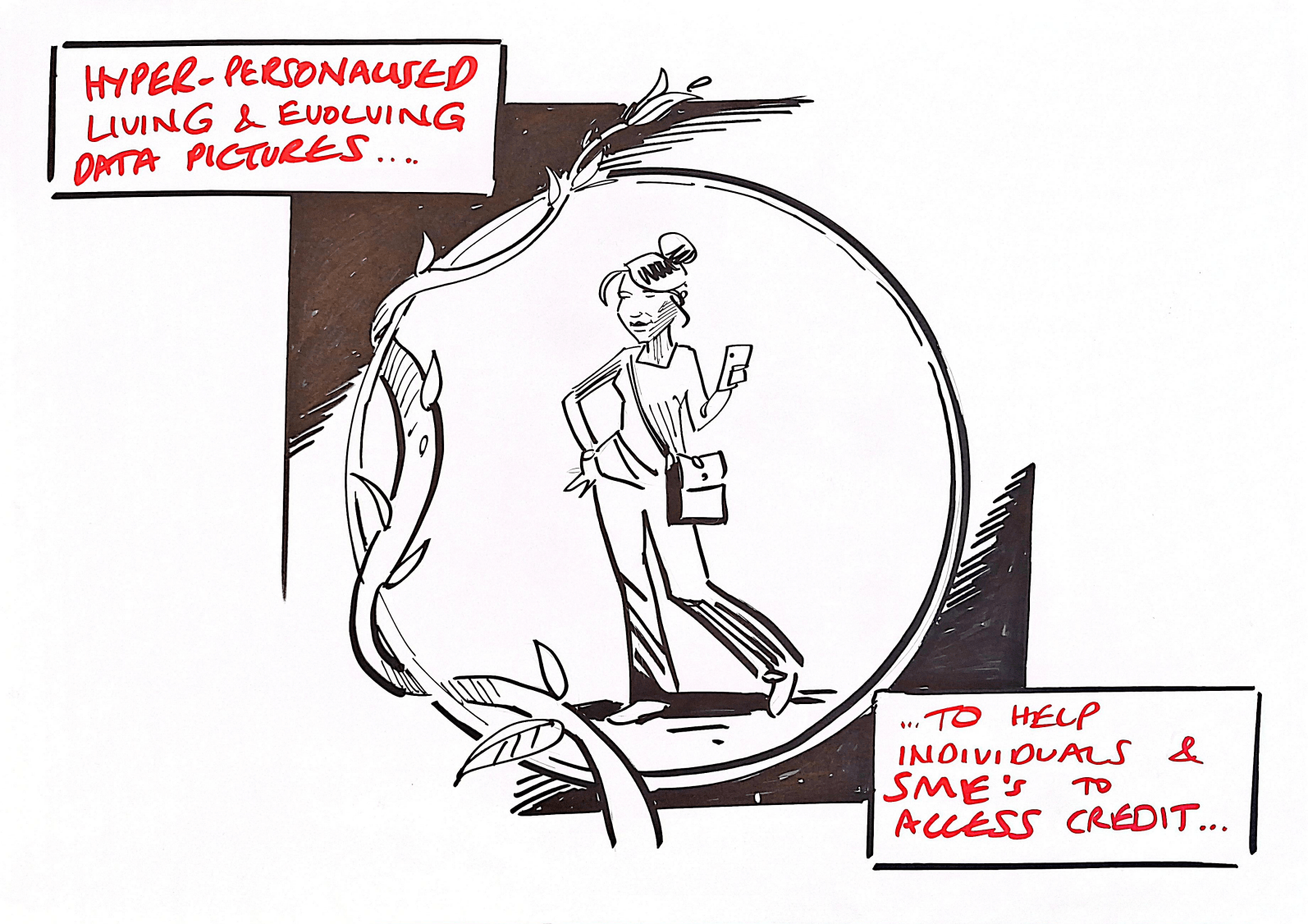
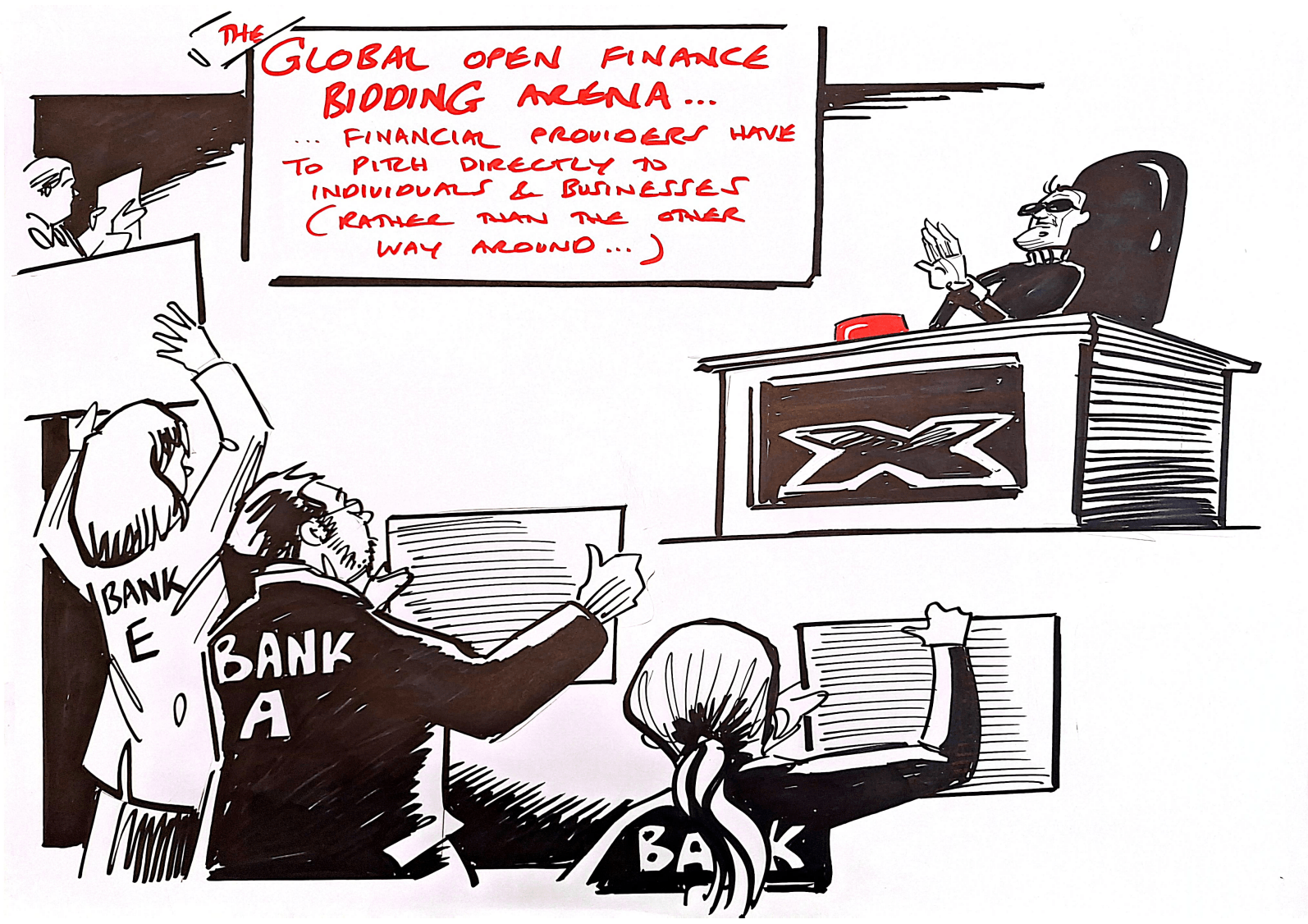
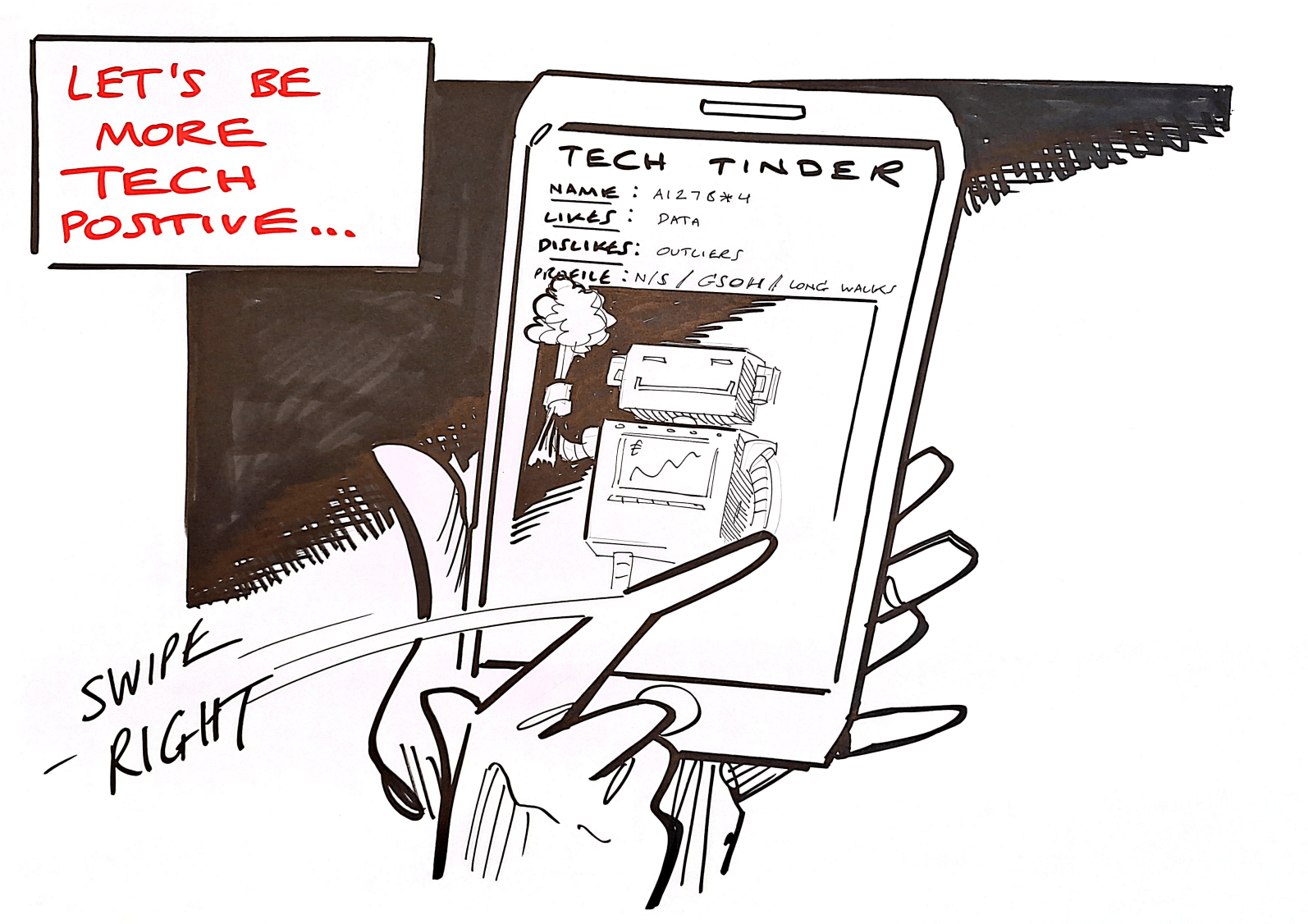
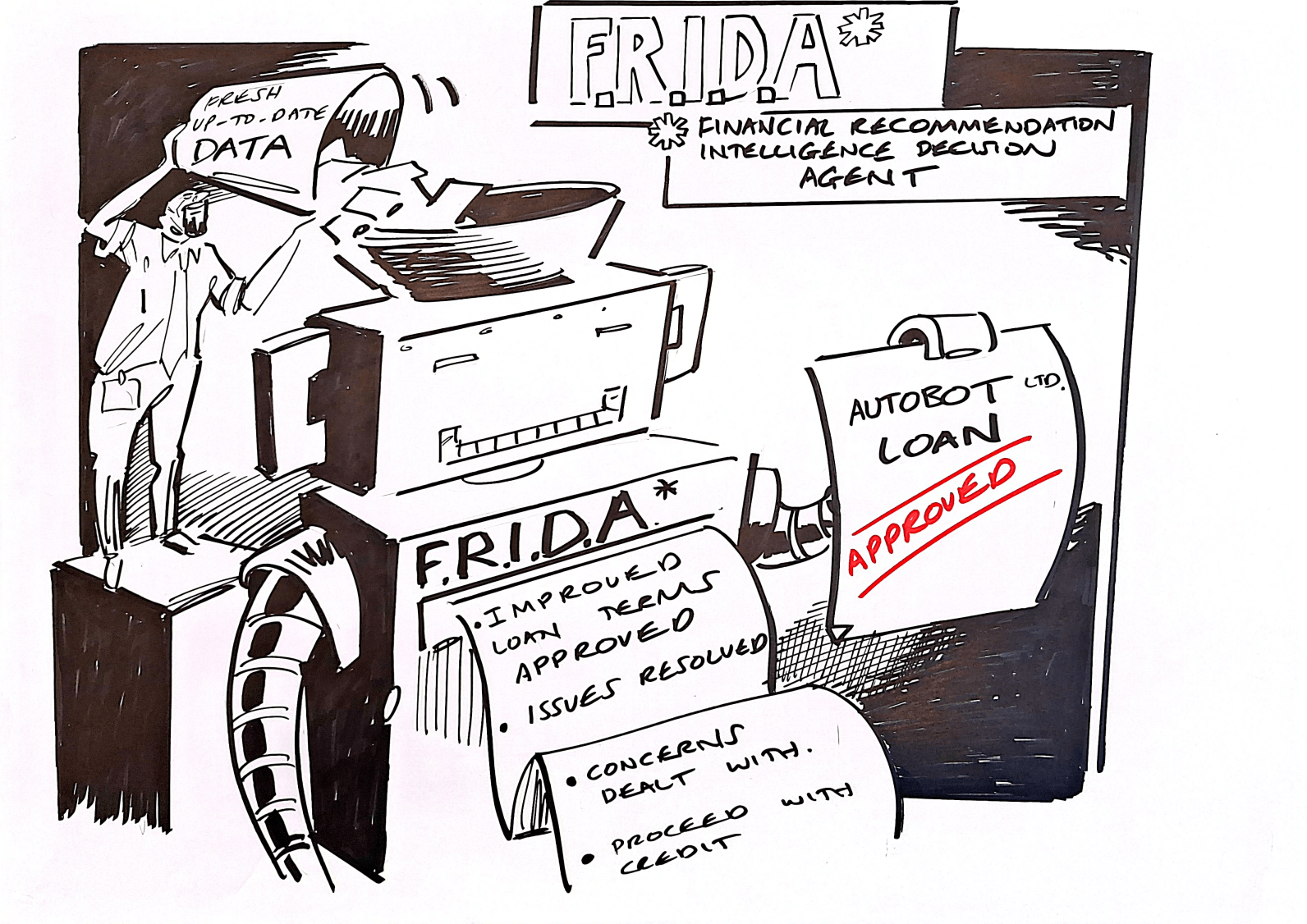
Each presentation team also worked with our graphic artist to create a bespoke visual for their use case, making abstract concepts tangible and giving each group a genuine sense of ownership over what they had built.
Seven use cases, one governing insight
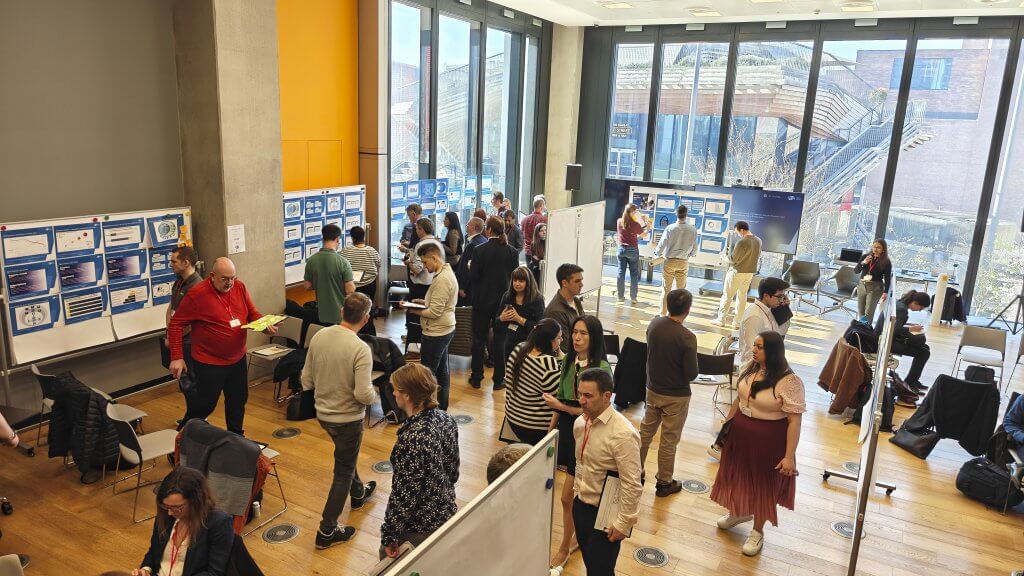
Seven presentations were delivered to the full group in the afternoon of day two. They covered every opportunity area and ranged in ambition from near-term product concepts to longer-horizon infrastructure plays.
In Financial Wellbeing, one team built the case for an All-in-One Optimisation Platform to help consumers caught in what they vividly called a “financial washing machine” of debt, fear and uncertainty. Another developed F.R.I.D.A., the Financial Recommendation Intelligent Decision Agent, a real-time financing hub for businesses embedded in existing accounting software, so that owners check pre-approved options rather than applying for loans from scratch.
In Financial Growth, the SME Loan Passport proposed consolidating all relevant business data, VAT returns, credit scores, HMRC records, into a single verified digital document. The problem framing was sharp: around half of SMEs fail due to cash flow issues, often because timely funding is inaccessible rather than genuinely unavailable. No new data would be created; existing data would simply be better connected and more legible to lenders.
In Financial Resilience, teams designed platforms for proactive life event planning and automated emergency fund management, systems that anticipate financial shocks rather than simply responding to them. In the Blue Sky track, a Digital ID Ecosystem positioned secure, modular, blockchain-anchored identity as the enabling infrastructure without which none of the other use cases could scale.
Woven through all of it was the insight that had emerged on day one. The data exists. The technology exists. What is missing is the framework, the shared rules that allow data to flow securely and beneficially across institutions, sectors and borders. It was, as one participant put it, like having the motorway without the highway code. The infrastructure is there. Now write the rules that make it safe to use.
What came next
The sprint did not end when the presentations did. Its outputs fed directly into the FCA’s programme of work. The FCA Smart Data Accelerator was launched to test the most high-impact use cases and enable agile policy development. Techsprints to build use case prototypes on SME finance and mortgages launched at the end of 2025. Research notes on the foundations, opportunities and barriers of open finance, and on the evolving role of technology, were published in summer 2025. And the roadmap is only the beginning. The PRISM Taskforce launching in March 2026 looks at leveraging the strong co-design momentum with stakeholders to build a shared framework to better understand where and why the potential impact of open finance is higher. Research on the architecture and infrastructure is ongoing, leading to actual model testing to support pragmatic, evidence based, effective decisions.
What the sprint demonstrated, above all, was the value of bringing the right people together in the right conditions. Not to be consulted, but to build. Not to hear what the future might look like, but to make it.
“This was an incredible project, from start to finish. The whole team at Treehouse did an astonishingly great job at supporting us in building something that could be described at the turning point for open finance.”
Simone Plances – Smart Data Accelerator, Manager, FCA
FCA Open Finance Sprint 2025

“Working with Treehouse Innovation during the 2025 Open Finance Policy Sprint was an exceptionally positive experience. Their expertise, creativity and collaborative approach made a real difference. The whole process, from the initial deep dive to the design and the delivery of the sprint, enabled us to bring focus and clarity to what we wanted to achieve, but also to what we needed. The sprint was a clear demonstration of the power of creative collaboration to make policy making faster, more agile, and dynamic. More modern. It set the foundation for what came after, a new way of enabling ideas to become decisions, from the ground up.
The team at Treehouse Innovation have done an amazing job at guiding us and the sprint participants, helping bringing new ideas out and stimulating creativity and collaboration.”
Simone Plances, Smart Data Accelerator, Manager, FCA
Facing a similar challenge?
Tell us what you are working on, and a member of our senior team will be in touch shortly.
Let's talkSimilar stories
Building innovation leadership capability at Porsche
How can we help our top team to drive innovation throughout the business? With disruptive technologies, regulatory change, and new entrants gaining traction, innovation is more important than ever in the automotive industry. In order […]
Read moreSony PlayStation: Top 100 Leadership Summits
How can we align our leaders around big strategic change? The gaming industry has been through a massive period of change in recent years. As gaming has moved online, gaming brands have had to fundamentally […]
Read moreNews UK: Designing creative, collaborative environments
News UK (home of The Times, Sunday Times, The Sun and other high profile news brands) wanted to reimagine how physical space in its London offices might be used to reinforce company values and encourage collaboration and creativity.
Read more