Outputs vs. Outcomes

When AI can produce anything, the only thing that matters is what you do with it.
TL;DR: The days of relying on knowledge stored in human brains as a professional differentiator are rapidly coming to an end. AI is making knowledge and polished outputs freely available to everyone, which means the human skills that turn outputs into real outcomes (moving people emotionally, building trust through relationships, and deciding what's worth doing at all) are now more valuable than ever.
The Direction of Travel
AI doesn't hallucinate the way it did two years ago. It won't hallucinate the way it does today in two years from now. We are moving, faster than many people realize, toward a world where the knowledge once jealously guarded inside expensive professional brains is freely, instantly, and reliably available to anyone who asks the right question.
Beyond all the talk of tools, automation, and disruption, the trajectory we are on suggests something even more profound: a fundamental shift in our relationship with knowledge, and with the things we create from it. It begs some really tough questions about the future value of professional advice, research, strategy or design, all of which seem to be on an inevitable course to commodification.
What will we be left with? And should we be scared?
Nobody has this figured out, and I'd be skeptical of anyone who claims they do. But after enough conversations and client engagements on this topic, one distinction keeps coming back to me. It's a simple one. But it might be the most useful frame I've found for thinking about not just the future of work, but the kind of work we are inherently best equipped to do as humans.
Outputs vs. Outcomes
AI produces extraordinary outputs. Polished documents. Sophisticated analyses. Entire product concepts, rendered in minutes. The world is already being flooded with them, and will be more so. But outputs are not outcomes. A prototype sitting on a server is not a product successfully launched. A strategy deck is not a strategy executed. Even the most brilliant concept design does not equate to a real change in the world.
Outcomes require humans. They always will.
No matter how brilliant the output, making something real requires getting people behind an idea, changing behavior, building trust, making others feel something. That is irreducibly human work. And as AI makes outputs cheaper and faster to produce, the bottleneck shifts almost entirely to the human capacities that convert them into something that actually happens.
Moving People With Emotion
You can engage someone intellectually. You can present the data, make the argument, build the case. You can tell them what to do, or why they should. None of that is the same as actually moving them.
In the early 2000s, organizational psychologist Adam Grant studied a group of fundraising callers at a university, people whose job was to solicit donations by phone. Performance was flat and morale was low. Grant ran a simple experiment: he brought in a scholarship student whose education had been funded by the donations these callers raised, and let them talk to the team for a few minutes. No new scripts. No incentives. Just a brief, real conversation with someone whose life had been changed by their work. In the weeks that followed, callers spent 142% more time on the phone and raised 171% more money. Nothing changed except the emotional reality of the work. People felt it, and that feeling drove action in a way that no argument or instruction had.
This is a fundamental feature of how human beings operate. You cannot think your way into action. You cannot be instructed into genuine commitment. But if something reaches you emotionally, you will move.

Research on how people respond to AI-generated art points to the same truth. When people know a piece of art was made by AI, they tend to respond to it less favorably. Not because they can necessarily tell the difference in quality, but because they know there is no human emotional content behind it. It's the felt presence of another person's inner experience that resonates. That is what they're actually responding to, and it cannot be replicated.
The skills that make emotional connection possible (genuine listening, empathy, the active seeking of real human understanding) are not soft skills. They are the prerequisite for everything that matters. In a world where AI can produce any output on demand, the people who can actually reach other people are the ones who convert all of that capability into something real. These are the superpowers of the age of AI.
Building the Relationships that Make Things Happen
A brilliant solution that no one gets behind isn't a solution. It's just a thing: a document, a speech, a prototype. Something that exists in the world without changing it.
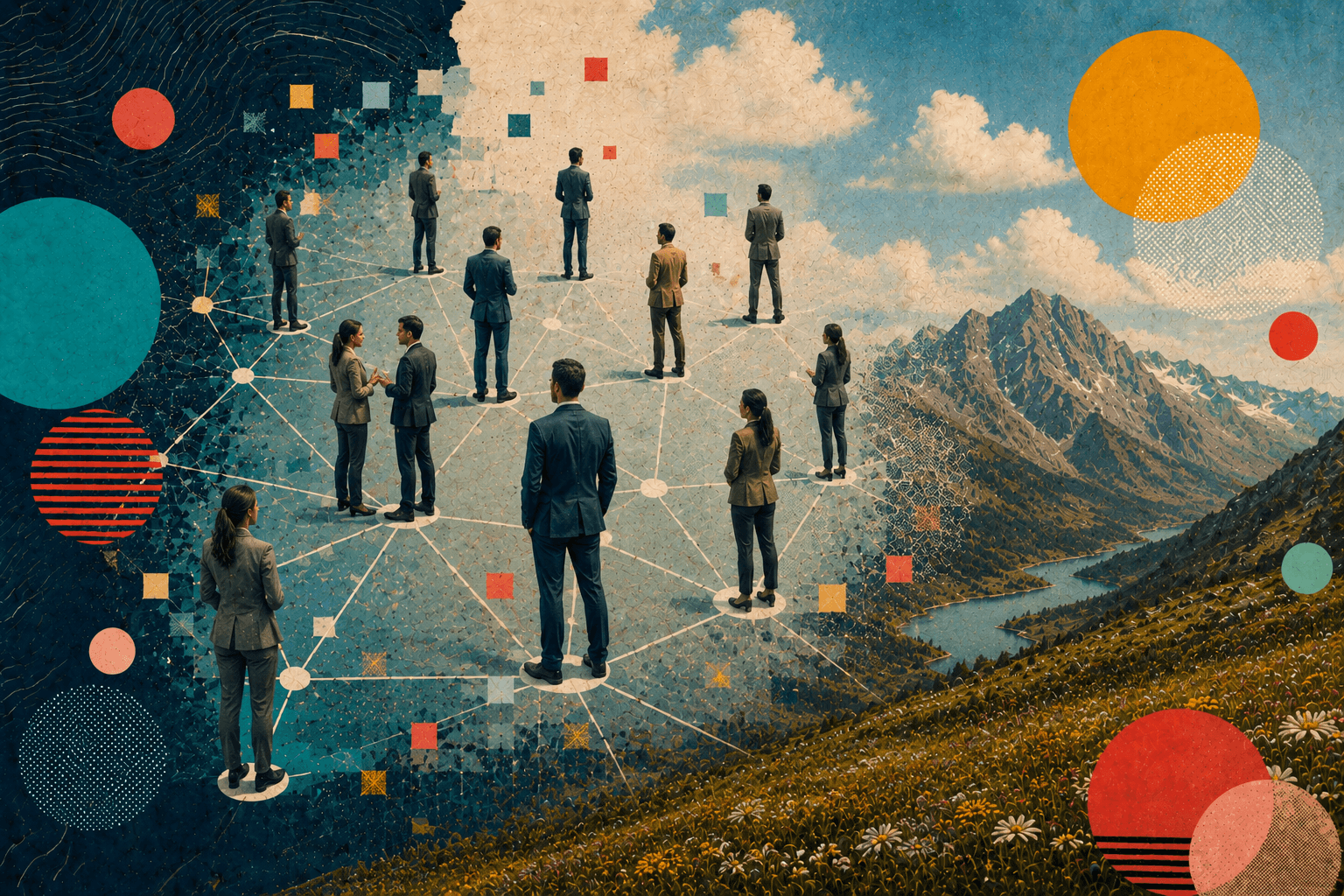
Getting people behind an idea takes more than a compelling argument. It requires trust, and trust lives in relationships, not in content, however polished. Kotter's research on organizational change is clear: people don't move because of a well-designed slide or a persuasive memo. They move when the cost of staying still feels visceral, and when they trust the people asking them to move. That trust is built over time, through both the vertical trust people have in leaders they believe in, and the lateral trust between peers who have shown up for each other across teams and departments.
Relationships are the bond that holds an organization together as something more than a collection of individuals. They are what allow people to mobilize around a new idea, to pivot as a coherent whole rather than a disjointed set of parts, to move with shared purpose when the moment demands it.
In a world changing faster than any single person can fully process, this capacity to act together, fluidly and confidently, is more important than it has ever been.
This connective tissue doesn't build itself. It requires deliberate effort and the honing of some undervalued, uniquely human skills: seeking out people outside your immediate circle, establishing real emotional connection, and proactively building and maintaining bonds between people who might otherwise never find each other.
No AI builds that infrastructure. It is created and maintained entirely by people who choose to invest in it, and it compounds over time in ways that are invisible until they're needed, and then suddenly indispensable.
Deciding What Matters
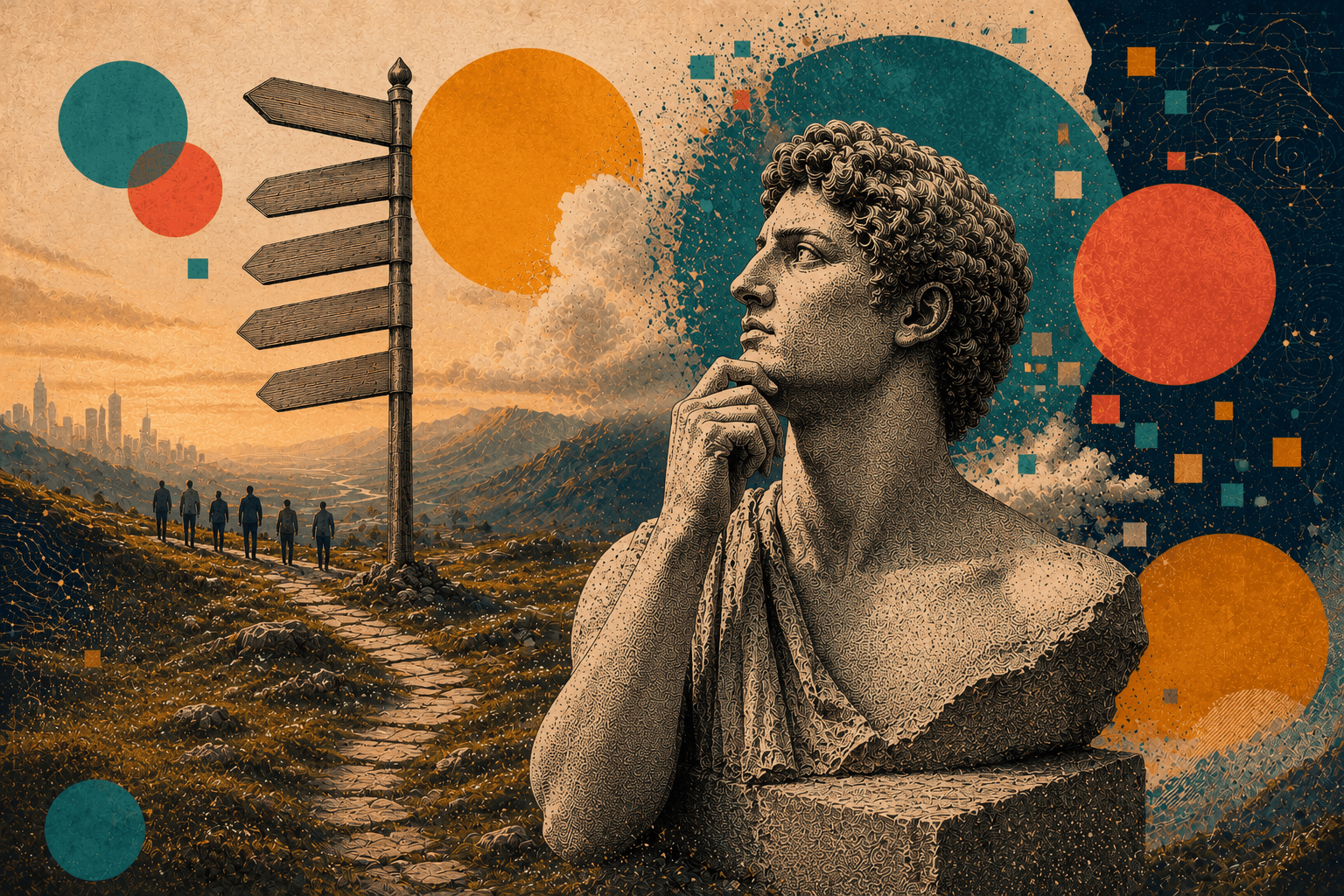
As AI expands what is possible, the most critical question shifts from "can we?" to "should we?"
AI can optimize for any goal you give it. Choosing the right goals, and having the clarity to reject the wrong ones, is entirely on us.
This is ethical work at its most basic: deciding what matters and what doesn't, what is worth building and what should never be brought into the world, what is fair and what causes harm. But follow those questions far enough and they stop being technical or even organizational. They become the questions humanity has always struggled with. Right and wrong. Good and evil. What we owe each other, and why we are here at all.
No model can (or rather, should) answer those questions. These are decisions that require judgment that comes from actually living in the world, not processing it but experiencing it.
Feeling the consequences of decisions. Understanding what people are going through. Sensing when something that looks good on paper is wrong in practice.
The world is changing faster than our mental models can keep up with. Our job is to interpret that change through a human lens, looking at the cultural shifts, the behavioral changes, the things people are feeling but not yet saying, and asking: what does this mean, and what should we do about it? Not just processing more data, but filtering all of it through our values, our experience, and our judgment about what outcomes are actually worth pursuing. That is how we ensure that what emerges from all this capability is something we genuinely want, something we chose, rather than something that simply happened to us.
Where We Go From Here
The clearer we become about which domains are irreducibly human, the faster we can start developing the parts of ourselves that have been underserved for a long time. Much of our professional development over the past few decades has focused on the very skills we are now discovering fall naturally within the domain of machines. The emotional, relational, and ethical capacities described here have often been treated as secondary, as soft, as harder to measure and therefore easier to deprioritize.
That has to change. For organizations that want to succeed in the world ahead, these capabilities are not a complement to the real work. They are the mechanism by which any work becomes real. Developing them, deliberately, seriously, at every level, is what will separate organizations that produce infinite output from organizations that actually create meaningful outcomes.
Many of the tasks we have built careers around will soon belong to machines. That is not a cause for despair. It is, if we're willing to see it clearly, a kind of liberation. We are being relieved of a burden we mistook for an identity, and handed back something more interesting in its place. The chance to focus on the work that was always ours. The work that actually moves people, builds trust, and changes things. The work that makes outcomes, not just output.
That opportunity is in front of us right now. And it is a genuinely exciting one.
Ready for what comes next? Get in touch